
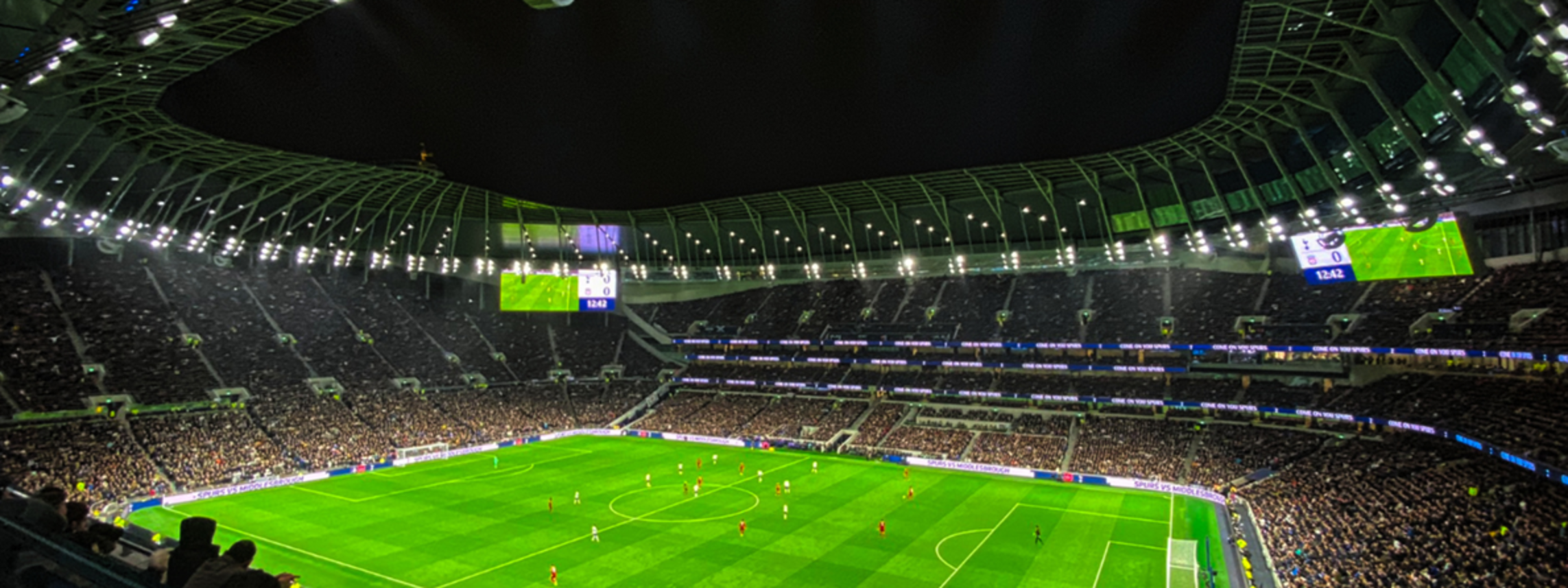
The World Cup ‘Runneth’ Over for These INTIX Members
Many INTIX members certainly worked very hard on the just-concluded World Cup across multiple venues and in multiple roles. We talked to several of them and got their takes and memories on the experience. The consensus was largely the same. It was a challenge! But most would do it again, and they were very eager to tell all. Roles Played Garrett Nolan Garrett Nolan was involved in ticket allocation, distribution and troubleshooting for two different agency clients that specialized in global events and hospitality during the 2026 FIFA World Cup. One was the iLUKA Collective, supporting McDonald’s. The other was The Team (formerly known as Wasserman), supporting Lenovo and Unilever. He says, “Both clients, or more specifically, the project teams of these clients, were based in London. Specifically for The Team, there was a need to recruit and hire individuals to help manage all the ticket allocations and distribution across the 104 total matches in addition to establishing a phone support team to assist ticket holders that would call in with questions or problems. As such, I needed the support of fellow INTIX member Jason Varnish and his company BOM Advisers to assist with the staffing and payroll. In turn, I was able to have other INTIX members join the project, namely Lori Murphy, Richard Powers, Lauren Dugan and Bruce Bielenberg.” Lori Murphy worked as a ticket manager for the Central Cluster games. “The Central Cluster cities were Kansas City, Dallas, Houston, Monterrey, Mexico City and Guadalajara,” she says. “I managed and distributed tickets to Lenovo's executives, stakeholders and guests for those cities. I worked remotely, then went to Dallas to provide onsite support.” Lauren Dugan Lauren Dugan had a blast working with BOM Advisors on a special consulting gig with The Team, helping to manage ticketing inventory and seating assignments for Lenovo, one of FIFA’s partners, for the Western Cluster [Pacific Boast venues] matches. She says, “This meant U.S. and Canada teams were part of my cluster. E ek! I worked in spreadsheets most of the days.” Ryan Coffey played a leading role in ticket operations on the venue side, supporting FIFA's global ticketing team with on-sale logistics, venue tour operations and match-day customer service. He states. “Our venue was responsible for resolving all ticketing issues through our stadium ticket offices while also leading access control and ticket scanning operations throughout the building. My role was focused on ensuring fans had a smooth experience from the moment they arrived through entry into the stadium.” Andrew Bragman , Vice President, Ticket Operations for the Los Angeles Stadium (SoFi Stadium and Hollywood Park), comments, “ Our work with FIFA began years ago looking at the seating configurations, manifests, hospitality areas and more. Using our experience hosting marquee events like the Super Bowl, we were able to collaborate with FIFA and OnLocation teams to help them understand the stadium and how it works best for an event of this scale.” For her part, Karen Sullivan served as a part-time supervisor, assisting fans with problems managing their tickets. She notes, “These ranged from downloading issues to problems with getting their resale tickets to accessing their hospitality locations.” Finally, Jeff Hecker of JHecker Consultring and formally with the New York Jets says, “I handled all the internal ticketing for the Jets. I also worked closely with the Giants and the stadium as our seating bowl allotments were combined.” Oh, the Challenges All of those interviewed for this feature were eager to talk about the many obstacles and roadblocks they had to overcome in helping to put butts in seats and the teams on the field. Nolan concedes there were certainly a lot of “hands in the cookie jar.” He says, “I did not have to deal with the general public per se, but having to manage the needs and expectations of corporate partners, agency clients and the end user of the ticket, all of whom can be people who are not experienced in the world of ticketing… that proved to be a challenge. There were many panicked messages from stakeholders claiming people have not received tickets, or the wrong tickets. The reality of the situation was usually late registration, so the tickets were not yet sent, or people trying to log into the FIFA World Cup ticketing app with a different email address than the one that was used to reserve tickets.” Coffey states that one of his biggest challenges was helping fans who had traveled from around the world only to encounter issues with third-party ticket sellers. “Those were difficult conversations because, in many cases, there was little we could do beyond explaining the situation,” he states. “It was especially tough when families with young children were affected. Operationally, we also had to transition from our legacy ticketing systems to an entirely new set of software and hardware for the tournament.” Hecker’s biggest challenge? One word: fraud! “And on a level very similar to what I’ve experienced with NFL games internationally,” he notes: “Communication needs to be much better and much sooner in the process.” Murphy adds, “Since I am neurodivergent, my biggest challenge was working with all the different cities and making sure the correct tickets were being sent to the correct accounts. Lenovo had over 20,000 tickets that needed to be sent out to their executives, stakeholders and guests. I had to make sure I was working with the correct tickets for each match in the correct cities.” Oh, the Memories But the memories for Murphy will outweigh any challenges she faced. She recalls, “We had the opportunity to attend the final group game in Dallas. It was Argentina versus Jordan. It was, by far the most, amazing event I've ever attended. It's hard to describe. Attending a World Cup game wasn't on my lifetime bingo card, much less a bucket list event. While I was looking around the venue and taking it all in, I felt I had a small part in creating happy memories for the fans, stakeholders and executives.” While Nolan’s World Cup projects were technically remote, he did have the opportunity go to Los Angeles Stadium (SoFi was temporarily renamed) for a couple of matches. He was also in New York in the days leading up to the final. He comments, “It was truly remarkable to see a sport bring people from all over the world together. We are constantly barraged with negative information in the news and on social media so it was cathartic to be around ~70,000 fans cheering on their team and generally having a great time. Citizens of the world have more similarities than differences and this was on full display.” Dugan will also remember the opportunity to work alongside a wide array of people. “We had team members from the U.K., Abu Dhabi and all over North America working on this project,” she points out. “That happens rarely in my line of work to be able to interact with so many different personalities from ticketing, branding and hospitality professionals.” Andrew Bragman Bragman expects there will be at least a couple things that stand out in his memory in the years to come. “We were lucky enough to host the first match in the United States,” he says, “featuring the USA and Paraguay. I snuck out of the office to watch the kickoff of that match for about 30 seconds, and it was a great feeling to see all of the work come to fruition. The second would probably be a couple days after the last match we hosted in the quarterfinals, when our entire staff was able to go down to the pitch for a few hours, play soccer and enjoy the experience of being on a World Cup pitch.” Coffey was equally wistful when posed this question. He replied, “Being part of an event that impacted not only our local community but also reached a national and global audience is something I'll always be proud of. Showcasing the Seattle Stadium (Lumen Field) on the world stage and seeing it recognized as a model of success was incredibly rewarding. What stands out most, though, was the partnership between our ticket operations team and FIFA's ticketing team. Everyone approached the event with the same goal of creating the best possible experience for fans, and that collaboration made all the difference.” Lessons Learned So, what were the lessons these INTIX members learned from their World Cup experience? Bragman exclaimed that he learned “A ton! This was my first time working with FIFA, who are headquartered in Zurich. So navigating time zones and a constantly expanding global team was challenging, but a great learning experience. And while we have hosted major events and numerous soccer matches before, the experience of hosting eight matches, mostly one every three days, is a challenge unlike anything I’ve experienced and probably won’t again until 2028 when we host the Olympics.” Ryan Coffey Coffey concurred, adding, “One of the biggest takeaways was seeing how people from different countries, cultures and organizations can come together around a shared purpose. I had the opportunity to work with incredible colleagues from Zurich, Miami and Seattle, and despite differences in time zones, cultures and processes, everyone was committed to delivering a seamless experience for fans.” Murphy realized she needed new glasses, which prompted her to make an eye appointment early on. “I ended up with a new prescription and glasses as well.” Would They Do It Again? Hecker was among the first to respond to this exit question. “Certainly,” he answered. “At this point in my career, my hope is to always be involved in the largest of world class events.” Coffey acknowledges that it took an incredible amount of collaboration, coordination and execution. “So maybe after another four years to recharge!” he cracked wise. “But yes, absolutely.” Dugan adds, “I would, but more so for the connections of people I got to work with and for. In ticketing, we all deal with nuances — most of them the same, they’re just on different scales with the different size and type of events. With knowing now how it went on this project, I’d be more prepared going into it again.” Nolan chimed in, “Despite the issues, I would absolutely do this again. It’s not every day one gets to work on what is quite literally the biggest single sport event on the planet. The only thing that is similar to the scale of the World Cup is the Olympics.” Lori Murphy Murphy perhaps put the most thought into her answer: “ I think I would do this again, at least this type of job. I liked it because I was not fan facing, and dealing with the fans at the event. I was behind the scenes working with new colleagues, seating their groups. The best way I could describe the whole project is this: Everyday was the opening day/night of a new ballpark. Everything must be done right now, putting out fires, managing expectations all while making sure all the tickets were sent out correctly for that day's matches in the various cities across three countries. It could also be described as everyday was the World Series on repeat.” Sullivan was still beaming from the experience when presented with this question. Her answer: “The overall enjoyment shown by the fans reminds me of why we work in ticketing. They are so happy when we can solve their problems because they can now see what they love. I think we get caught up in the problem sometimes and don’t remember how much the guests want to see the event and the effort they have put into getting the ticket and getting to the venue. Enabling them to see what they love is the fun part of ticketing. I’d absolutely do it again!” Finally, Bragman concludes, “ I joked the day after our last match that it was the most fun I would never want to do again. And then I watched a match on tv from another city and immediately was jealous of the people working that match. So, despite the challenges and lack of sleep, I’d do it again in a second. This is the kind of thing we live for in ticketing, and I can’t wait for the next opportunity!” You May Also Like Accessibility Is Everyone’s Job: How the New Victory Theater Built a Culture of Inclusion INTIX Member Companies: What’s in a Name? Part II Want news like this delivered to your inbox weekly? Subscribe to the Access Weekly newsletter , your ticket to industry excellence.